Communication Mistakes Small Businesses Make When Using Two-Way Radios
Read Time:3 Minute, 11 Second
Efficient communication keeps every successful business running smoothly. Whether coordinating warehouse staff, supervising a construction site, managing a security team, or organizing a large event, employees need a fast and reliable way to stay connected. While smartphones have become essential tools, many businesses still rely on two-way radios because they provide instant communication without depending on mobile networks.
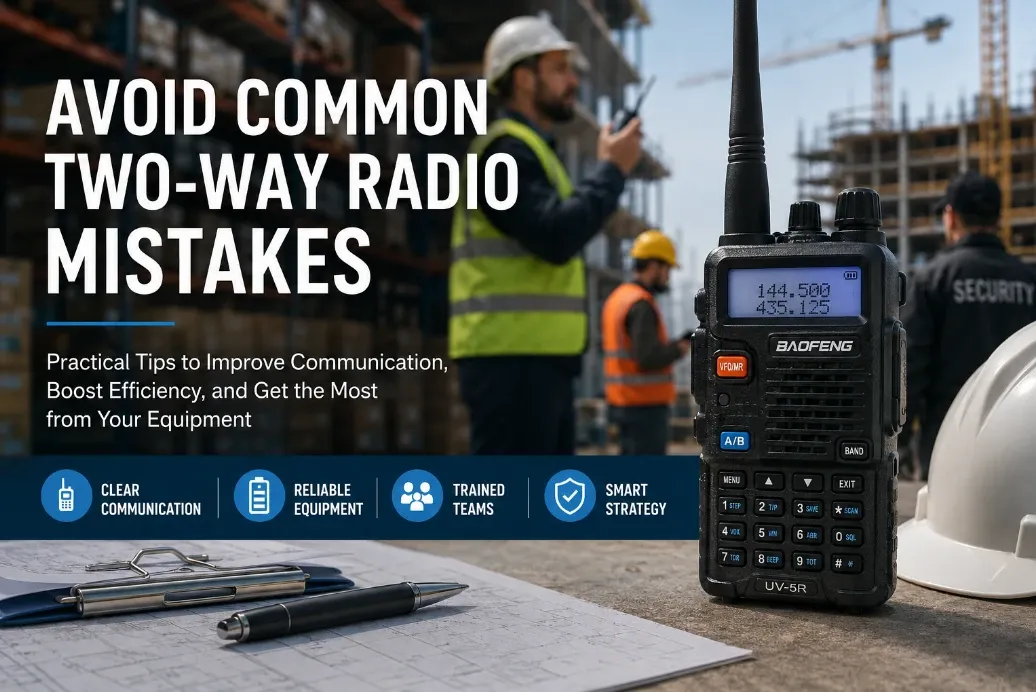
For companies looking for an affordable communication solution, handheld radios such as the Baofeng UV-5R have become increasingly popular. Before purchasing equipment, however, it’s worth researching different models, accessories, and practical buying advice. Resources like www.binoculars-telescopes.com offer detailed guides that help business owners compare radio options and choose equipment that matches their operational requirements instead of simply buying the cheapest available model.
Unfortunately, many organizations purchase radios without developing a proper communication strategy. As a result, productivity suffers, employees become frustrated, and the equipment never delivers its full value. Fortunately, most of these mistakes are easy to prevent.
Buying radios based only on price
Cost is always an important factor, especially for small businesses. However, purchasing the least expensive radios often creates additional costs later.
A better purchasing decision should consider:
- communication range;
- battery life;
- durability;
- ease of programming;
- accessory availability;
- future expansion.
Sometimes spending slightly more upfront results in equipment that remains reliable for many years.
Failing to establish communication procedures
Many companies hand out radios and assume employees will naturally figure everything out.
Instead, every business should create simple communication rules covering:
- primary operating channels;
- backup channels;
- emergency procedures;
- employee identification;
- priority communications.
Clear procedures reduce misunderstandings and improve efficiency across every department.
Not training employees
Even modern handheld radios include numerous settings that first-time users may find confusing.
Basic training should explain:
- channel selection;
- volume adjustment;
- battery indicators;
- push-to-talk etiquette;
- emergency communication procedures.
A short training session often prevents months of unnecessary communication problems.
Programming incorrect frequencies
Programming errors remain one of the most common reasons businesses experience unreliable radio communication.
Before configuring any Baofeng radio, operators should verify that they understand the purpose of each frequency and comply with local regulations. Businesses using these radios for amateur radio activities, demonstrations, or staff training can watch this detailed Baofeng frequency list to use before programming their devices. Doing so reduces mistakes and helps users understand which frequency ranges are commonly assigned for different types of communication.
Using maximum transmit power all the time
Many new users believe High Power automatically produces better communication.
In reality, maximum power isn’t always necessary.
Lower power settings often provide:
- longer battery life;
- reduced interference;
- cooler operating temperatures;
- more efficient spectrum use.
Selecting the appropriate power level improves both performance and battery longevity.
Ignoring battery maintenance
Dead batteries are responsible for countless communication failures every day.
Businesses should create a simple maintenance routine that includes:
- scheduled charging;
- rotating spare batteries;
- replacing aging battery packs;
- checking charger performance.
Reliable communication begins with reliable power.
Forgetting preventive maintenance
Radios are frequently exposed to dust, vibration, moisture, and accidental drops.
Simple inspections can identify problems before equipment fails.
Maintenance should include checking:
- antennas;
- charging contacts;
- belt clips;
- speaker microphones;
- battery condition.
Replacing inexpensive accessories early often prevents much larger repair costs.
Using radios for every type of communication
Two-way radios are excellent for short, immediate conversations, but they shouldn’t replace every communication tool.
Many successful businesses combine radios with:
- scheduling software;
- task management platforms;
- email;
- messaging applications;
- GPS fleet management systems.
Each technology has its own strengths.
Forgetting to review communication needs as the business grows
A communication system that works well for a team of five employees may become inefficient once the company expands.
As operations grow, businesses should periodically evaluate whether they need:
- additional radios;
- improved antennas;
- repeaters;
- dedicated communication channels;
- upgraded commercial equipment.
Planning ahead avoids expensive system replacements later.

Happy
0 %

Sad
0 %

Excited
0 %

Sleepy
0 %

Angry
0 %

Surprise
0 %
 0
0
 0
0