Design Features That Increase Property Value in California Homes
Read Time:3 Minute, 30 Second
In California’s real estate market, property value is closely tied not only to location and size, but to how effectively a home meets modern lifestyle expectations.
Today’s buyers evaluate homes through a practical lens: how the space functions, how it feels, and how easily it can adapt over time. As a result, certain design features consistently contribute to higher resale value.
Layout That Supports Everyday Living
One of the first things buyers notice is how a home is organized.
Layouts that reflect real daily routines—such as open kitchen and living areas, clear separation of private spaces, and intuitive movement between rooms—tend to create a stronger impression.
Before defining a layout, it is important to evaluate site limitations, zoning, and budget constraints that may affect the final design. This is often done through an early-stage planning and feasibility process, helping homeowners avoid decisions that may limit value later.
Homes that lack this level of planning often feel fragmented, even if they offer more square footage.
Natural Light as a Value Factor
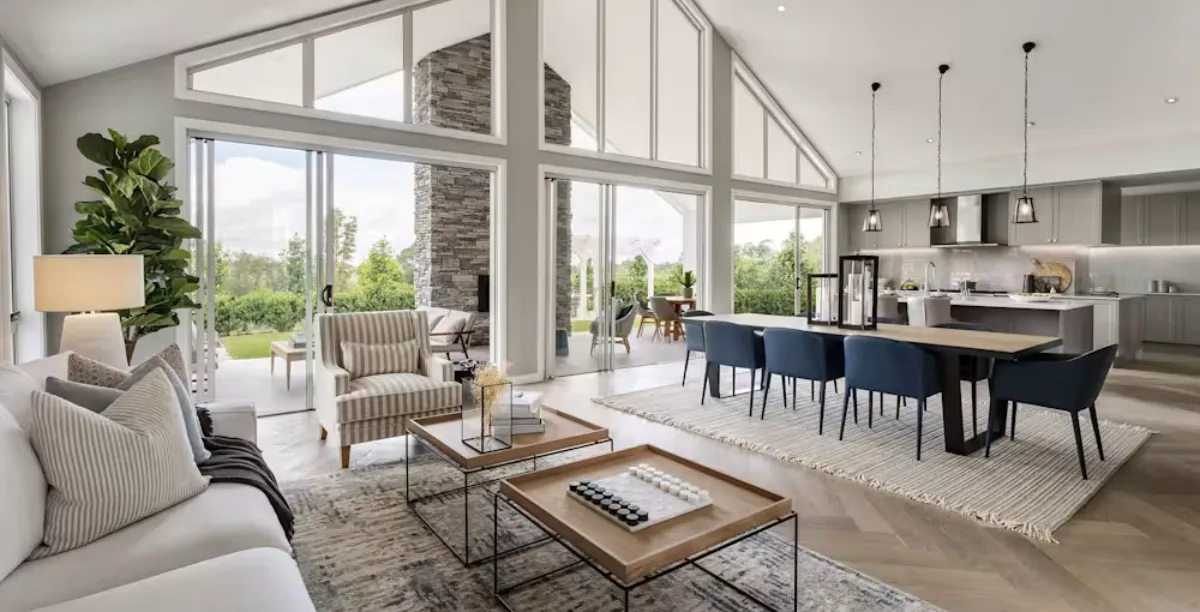
Natural light is not only a visual quality—it is a spatial parameter that directly influences perception, proportion, and material expression.
Well-resolved daylight strategies enhance the depth of space, reduce reliance on artificial lighting, and improve overall comfort. The placement, size, and orientation of openings define how light moves through the interior throughout the day, shaping both functionality and atmosphere.
Homes with controlled and consistent natural light tend to feel more expansive and balanced, regardless of their actual size. In contrast, poorly oriented layouts often result in uneven lighting conditions that negatively affect both usability and perceived value.
In California, access to natural light is not an added feature—it is an expected standard that significantly influences market perception.
Indoor–Outdoor Living
The connection between interior and exterior spaces is one of the defining features of California homes.
Buyers consistently value properties that offer:
- Seamless transitions between indoor and outdoor areas.
- Functional patios or decks.
- Spaces that support year-round use.
When designed properly, outdoor areas act as an extension of the home, effectively increasing usable space without increasing construction costs.
Efficiency of Space as a Value Metric
The total size of a home is often less important than how effectively that space is organized and utilized.
Efficient planning minimizes non-functional areas and prioritizes usable square footage. This includes reducing excessive circulation, integrating storage into the architecture, and allowing spaces to serve multiple functions where appropriate.
From a market perspective, homes with well-structured layouts tend to outperform larger but less efficient properties. They offer better day-to-day functionality while also reducing long-term operational and maintenance costs.
As buyers become more sensitive to both usability and efficiency, spatial organization increasingly becomes a key determinant of value.
Simplicity as a Driver of Build Quality
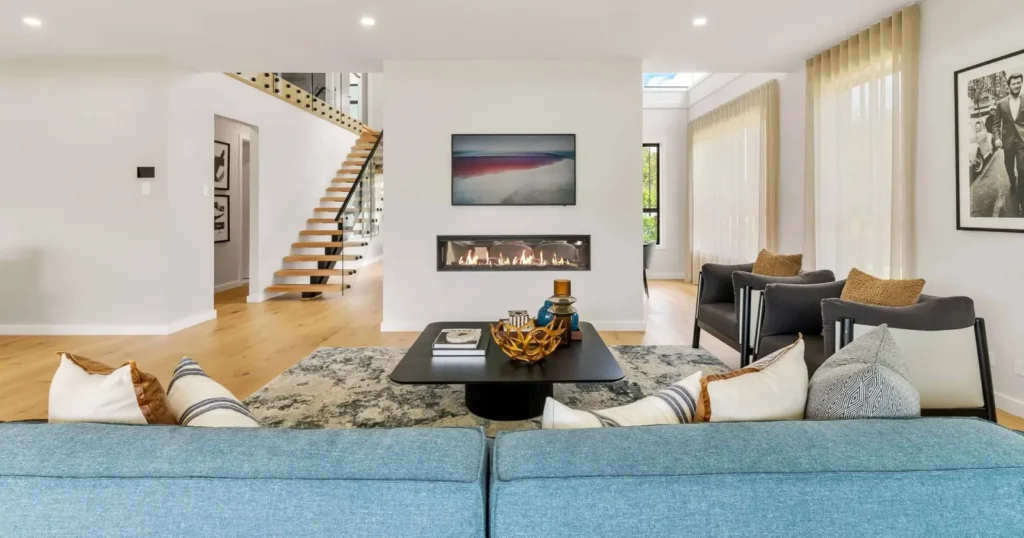
Architectural simplicity is often directly correlated with construction quality.
Projects with clear geometry, rational structural systems, and consistent detailing are easier to execute with precision. This reduces the likelihood of on-site adjustments, minimizes coordination issues, and improves the overall standard of finishes.
In contrast, overly complex designs—particularly those that introduce unnecessary structural or formal complications—tend to increase construction risk. They often require more intensive coordination, higher labor input, and can lead to inconsistencies in execution.
From both a construction and market perspective, simplicity is not a limitation, but a strategy that supports durability, quality, and long-term value.
Value as an Outcome of Integrated Design
Property value is not the result of isolated upgrades, but of how effectively a home is resolved as a complete system—from planning through execution.
Design decisions that improve spatial performance, respond to real constraints, and maintain internal consistency tend to deliver the most reliable long-term return. This includes how space is organized, how light is managed, and how architectural intent translates into built quality.
In California’s housing market, where expectations around lifestyle and usability are particularly high, value is closely tied to how well a home performs in everyday use.
Projects that prioritize clarity, efficiency, and adaptability are more likely to retain relevance over time—both as living environments and as assets within a competitive real estate landscape.

Happy
0 %

Sad
0 %

Excited
0 %

Sleepy
0 %

Angry
0 %

Surprise
0 %
 0
0
 0
0