
How Savvy Travelers Save Big on Car Insurance and Road Trips in the USA
Read Time:5 Minute, 55 Second
Road trips are one of the best ways to experience the United States. You get the freedom to choose your route, stop in small towns, and chase scenic views that flights can’t offer. But the “open road” lifestyle can also get expensive fast when fuel, lodging, repairs, and especially car insurance start stacking up.
The good news is that you can cut a lot of those costs without cutting the fun. This guide focuses on two things that matter most for a budget-friendly trip: keeping your insurance spend under control and building a travel plan that avoids common money traps. You’ll also find a few practical checklists, plus simple tables to help you estimate costs and pick the most useful savings moves.
Why Car Insurance Should Be Part of Your Road Trip Plan
Many people plan a road trip around destinations, hotels, and food—then treat insurance as “already handled.” But your policy choices can affect your real-world travel budget. If you’re overpaying monthly, you’re losing road-trip money before you even start. And if your coverage doesn’t match your situation, one accident or breakdown can turn into a financial mess.
Before your next trip, it’s worth doing a quick “insurance checkup”: confirm what coverage you have, what your deductibles are, and whether there are discounts you’re missing. Even small adjustments can add up to meaningful savings over a year.
What Typically Impacts Your Insurance Price
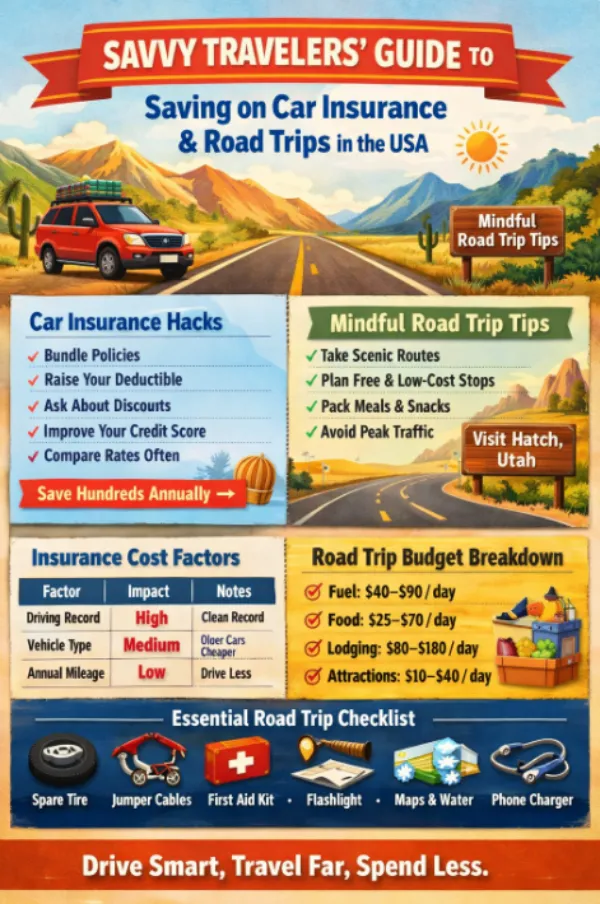
Insurance premiums vary by driver and state, but these factors usually have the biggest influence. Use this table as a quick reference when you’re trying to understand why your rate looks the way it does.
| Factor | Typical Impact on Premium | What You Can Do |
| Driving record | High | Avoid tickets/claims; ask about safe-driver discounts |
| Vehicle type | Medium/High | Safer, less expensive-to-repair cars often cost less to insure |
| Coverage & deductibles | High | Adjust deductibles carefully; remove unnecessary add-ons |
| Location | Medium | Rates vary by ZIP/state; shop around if you move |
| Annual mileage | Low/Medium | Report accurate mileage; ask about low-mileage programs |
Insurance Savings Moves That Often Work (Without Getting Complicated)
You don’t need a complicated system to lower your insurance costs. Most savings come from a few repeatable actions: checking discounts, comparing quotes, and choosing coverage levels that fit your real risk.
High-impact ways to reduce premiums
- Bundle policies if you have renters/homeowners coverage (multi-policy discounts can be meaningful).
- Compare quotes at least once a year, especially after moving or changing vehicles.
- Raise your deductible if you can afford a higher out-of-pocket amount during a claim.
- Review add-ons (some drivers pay for extras they don’t really need).
- Ask about usage-based options if you drive safely and consistently.
If you want a focused list of tactics that are easy to apply right away, this guide on little-known car insurance hacks to save hundreds annually breaks down practical ideas that many drivers skip.
“Rizz Your Ride” for Better Insurance Outcomes (Yes, It’s a Real Strategy)
Car insurance pricing is largely about risk. You can’t change every rating factor, but you can improve how “risky” you look on paper by keeping your vehicle well-maintained, driving predictably, and using safety upgrades that insurers tend to like.
Think of it as “presenting your best driver profile.” It’s not about gimmicks—it’s about reducing the chances of claims and showing consistency. Examples include keeping a clean record, maintaining good tires and brakes, adding anti-theft tools, and avoiding rushed driving habits that lead to tickets.
For a creative angle on making your driving style and car ownership look more responsible (without being cringey about it), check out smart ways to score better car insurance.
Build a Mindful Road Trip That Costs Less (and Feels Better)
Saving money on a road trip isn’t just about hunting discounts. It’s also about making choices that reduce “hidden costs” like rushed routes, last-minute lodging, and expensive highway stops.
Simple mindful travel habits that reduce spending
- Choose scenic routes when possible (they often have cheaper local stops than major interstate exits).
- Plan a few anchor stops and leave some flexibility for spontaneous detours.
- Pack food basics so every snack break isn’t a pricey convenience store run.
- Drive earlier to avoid traffic, reduce stress, and improve fuel efficiency.
- Research low-cost experiences like overlooks, trails, and small museums.
If you want a real-world example of slower, calmer travel with big scenery, this piece on a mindful traveler’s guide to Hatch, Utah is a great read for planning a route that’s scenic without feeling rushed.
A Simple Road Trip Budget Framework
Most people underestimate daily costs, especially on longer routes. Use this table as a realistic planning baseline. Your total will vary depending on your driving distance, lodging style, and how often you eat out.
| Budget Category | Typical Daily Range | Easy Ways to Lower It |
| Fuel | $40–$90 | Use gas apps, keep tires inflated, avoid aggressive acceleration |
| Food | $25–$70 | Mix restaurants with grocery meals; pack snacks |
| Lodging | $80–$180 | Book earlier; consider budget motels or camping nights |
| Attractions | $10–$40 | Balance paid sites with free hikes and viewpoints |
| Buffer / emergency | $10–$25 | Small daily cushion prevents budget blowups |
Road Trip Insurance Checklist (Fast but Important)
Before leaving, run through this short checklist. It can prevent surprises if something goes wrong mid-trip.
- Confirm your active policy dates and that payments are current.
- Check your deductibles (collision and comprehensive) so you know your real risk.
- Save your insurer’s claims number and your policy number in your phone.
- Know whether your policy includes roadside assistance (and what it covers).
- Verify that all drivers on the trip are properly listed if needed.
Practical Packing and Safety Essentials
Prepared drivers are less likely to end up with expensive towing, emergency purchases, or risky breakdown situations. Keep it simple: a few basics cover most problems.
Basic must-haves
- Spare tire (or tire inflator kit) and tools
- Jumper cables or portable jump starter
- Flashlight, gloves, and a small first-aid kit
- Water, snacks, phone charger, and paper map backup
- Emergency contacts and a plan for spotty signal areas
Quick Wins: Lower Costs Without Lowering Fun
If you only do a few things from this article, make them these. They’re the most “bang for your buck” actions that don’t require a ton of time.
- Shop your insurance annually and confirm discounts you qualify for.
- Plan 2–3 anchor stops and avoid overstuffing your itinerary (rushing costs money).
- Track spending daily for fuel, food, and lodging—small leaks add up.
- Mix free attractions with paid highlights to keep your trip balanced.
- Keep a small emergency buffer so unexpected costs don’t break your trip.
Conclusion
A great American road trip doesn’t have to come with an inflated insurance bill or a chaotic travel budget. When you combine smart insurance decisions with mindful route planning, you’ll spend less while enjoying more of the journey. Aim for simple improvements: reduce unnecessary premium costs, pack the essentials, plan flexible routes, and keep your daily spending visible.
Save where it matters, drive safely, and let the miles do the rest.

Happy
0 %

Sad
0 %

Excited
0 %

Sleepy
0 %

Angry
0 %

Surprise
0 %
 0
0
 0
0