The hidden value under your car: what happens to your exhaust system’s most important component?
Read Time:5 Minute, 3 Second
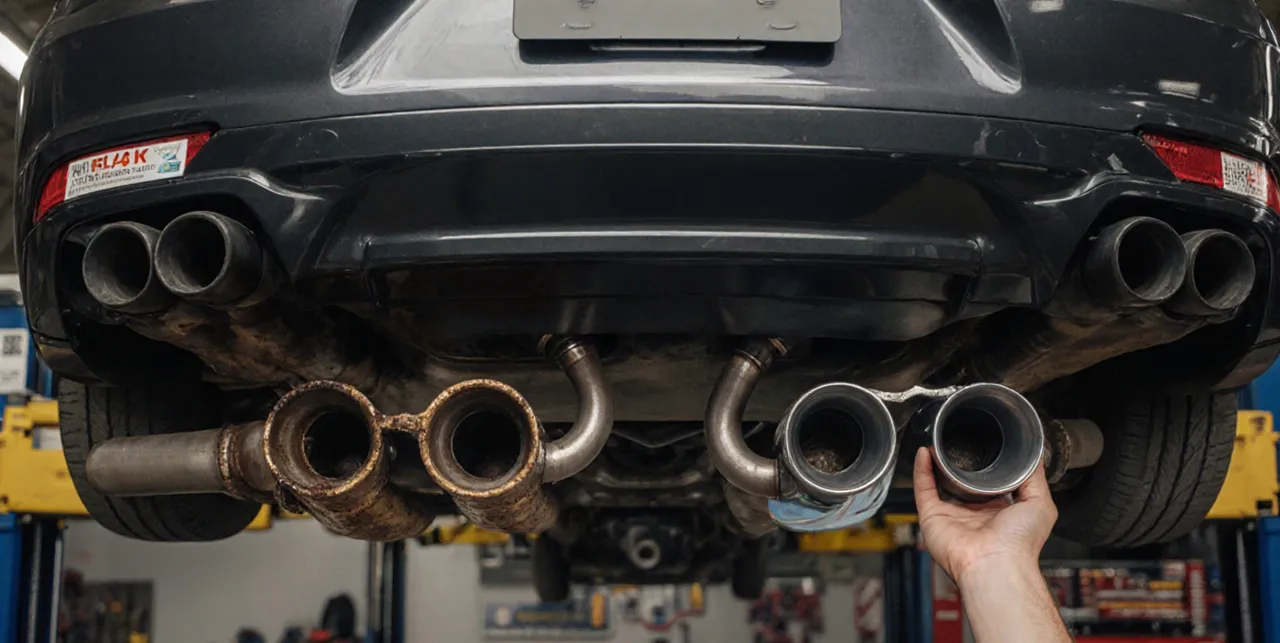
When a mechanic replaces an exhaust system, most drivers simply hand over the old parts and never think about them again. Yet buried inside that greasy assembly is a device containing some of the rarest metals on Earth — and knowing what to do with it can benefit both your wallet and the environment.
Meet the unsung hero of your exhaust system
Fitted between the engine and the tailpipe, the catalytic converter (Finnish: katalysaattori) has one job: to chemically convert the toxic gases produced by combustion into less harmful substances before they leave the exhaust pipe. Carbon monoxide becomes carbon dioxide, unburned hydrocarbons are oxidised, and nitrogen oxides are reduced to harmless nitrogen — all within a fraction of a second, every time the engine runs.
The chemistry works because the inner substrate — a ceramic or metallic honeycomb structure — is coated with a microscopic layer of platinum-group metals (PGMs): platinum, palladium, and rhodium. These act as catalysts, accelerating the chemical reactions without being consumed in the process. It is precisely this precious-metal content that makes the device so important to handle responsibly at the end of its life.
Why precious metals make this component special
The three metals at work inside every unit have very different personalities, but all three are extraordinarily rare:
| Metal | Primary role | Why it matters |
|---|---|---|
| Platinum (Pt) | Oxidises CO and hydrocarbons | Mined almost entirely in South Africa; supply is geopolitically sensitive |
| Palladium (Pd) | Dominant in petrol engines; works at lower temperatures | Has exceeded gold in price; demand from automakers outstrips mine supply |
| Rhodium (Rh) | Reduces nitrogen oxides (NOx) | Extremely rare; price spikes have reached tens of thousands per troy ounce |
A modern passenger-car unit typically contains between 3 and 7 grams of PGMs in total — a small amount by weight, but significant in value given current market prices. Larger units from trucks, SUVs, or high-performance vehicles may contain considerably more.
The environmental case for responsible disposal
Recovering PGMs from end-of-life units is one of the most energy-efficient metallurgical processes available. Extracting platinum from recycled material requires roughly 30 times less energy than producing the same amount from ore. For palladium, the saving is even greater. Every gram recovered from a recycled unit is a gram that does not need to be blasted from an open-pit mine, processed through energy-hungry smelters, and shipped across the world.
There is also a less-discussed benefit: accessible and financially transparent catalytic converter recycling (Finnish: katalysaattorikierrätys) reduces the incentive for theft. Units stolen from parked vehicles are a growing problem across Europe precisely because they contain those valuable metals. When legitimate channels are easy to use and pay a fair price, the black market loses much of its appeal.
What happens when a unit is recycled properly?
Step 1 — Collection and identification
Units arrive from garages, authorised dismantlers, and private individuals. Experienced technicians cross-reference the part against manufacturer databases to estimate PGM loading before any work begins. Not all units are equal: a small city-car unit and one from a large diesel SUV may look similar from the outside but differ enormously in precious-metal content.
Step 2 — Decanning and milling
The outer steel shell is cut away to expose the substrate inside. This ceramic or metallic honeycomb is removed, crushed, and milled into a fine, homogeneous powder. Homogeneity is essential for accurate sampling — without it, assay results would be unreliable.
Step 3 — Laboratory assay
A representative sample of the milled material is sent to an accredited laboratory. Techniques such as X-ray fluorescence (XRF) or inductively coupled plasma (ICP) spectrometry measure the precise concentration of platinum, palladium, and rhodium. This result determines the settlement value paid to the customer.
Step 4 — Smelting and refining
The bulk material is smelted in a high-temperature furnace. PGMs concentrate in a metal collector phase — typically copper or iron — which is then refined to separate and purify each metal. The resulting platinum, palladium, and rhodium re-enter the global supply chain, eventually finding their way into new automotive components, electronics, and medical devices.
What determines the value of your unit?
Several factors influence what a recycler will pay:
- Vehicle type and engine displacement — larger engines and stricter emission standards generally mean higher PGM loadings.
- Physical condition — a damaged or overheated substrate, or one contaminated with engine coolant, may yield less than an intact unit.
- Age and OEM specification — older units manufactured before Euro 4 or Euro 5 standards often have lower loadings than more recent ones.
- Live metal prices — platinum, palladium, and rhodium are traded daily on international markets. The same unit recycled at different times can fetch meaningfully different sums.
How to choose a trustworthy recycling partner in Finland
With potentially significant sums at stake, the choice of partner matters. Look for these qualities:
- Transparent assay reporting — you should receive a copy of the laboratory certificate, not just a take-it-or-leave-it price offer.
- Clear settlement terms — understand whether you are being paid on a per-unit price list or on actual assay results, and which method applies to your batch.
- Valid environmental permits — legitimate operators in Finland hold the necessary authorisations under Finnish and EU waste legislation for handling hazardous automotive materials.
- Supply chain traceability — a reputable company can demonstrate where material goes after leaving their facility and that the process complies with applicable regulations.
Metalaxis meets these criteria, offering Finnish automotive professionals and private customers a straightforward process built around real market data and documented assay results.
The bottom line
A unit that ends up in a general scrap bin represents a triple loss: financial value squandered, scarce metals lost to the economy, and an unnecessary environmental burden. Handled correctly, the same unit contributes to the circular economy, reduces the global demand for newly mined PGMs, and puts money back in the owner’s pocket.
As Finland’s vehicle fleet gradually transitions toward electrification, the stock of PGM-rich units on the road will eventually peak and decline. The window for capturing that embedded value efficiently is open now — and the right partner makes the process simple.

Happy
0 %

Sad
0 %

Excited
0 %

Sleepy
0 %

Angry
0 %

Surprise
0 %
 0
0
 0
0