What Are B2B eCommerce Solutions?
Read Time:8 Minute, 51 Second
B2B eCommerce solutions are platforms that enable businesses to sell products or services directly to other businesses online. Unlike B2C (business-to-consumer) systems that focus on quick, one-time purchases from individuals, B2B eCommerce platforms are built to manage complex, high-volume transactions between organizations—often involving negotiated pricing, contract-based terms, multi-user accounts, and specialized workflows.
In a traditional B2B environment, sales often rely on manual processes like phone calls, faxes, and purchase orders. B2B eCommerce solutions digitize and automate these transactions through a unified online portal that supports everything from bulk ordering and customer-specific pricing to inventory visibility and backend integrations with ERP and CRM systems.
The goal of a B2B eCommerce solution is to streamline how businesses buy and sell from one another, increasing efficiency, accuracy, and scalability while improving customer satisfaction.
The Evolution of B2B eCommerce
Historically, B2B commerce operated offline, heavily dependent on sales representatives and long-term relationships. However, the digital transformation that swept through B2C retail has now redefined B2B expectations. Buyers today—many of whom are millennials and digital natives—expect the same frictionless, self-service experience they encounter when shopping on consumer sites like Amazon.
This shift has driven massive investment in digital infrastructure. According to industry studies, global B2B eCommerce sales now exceed $20 trillion annually, accounting for more than 75% of total eCommerce volume worldwide. Businesses that once relied solely on traditional sales models are embracing digital platforms to automate procurement, expand market reach, and enhance data visibility.
Core Components of a B2B eCommerce Solution
A comprehensive B2B eCommerce platform must handle a diverse range of business needs. Below are the foundational components that define robust solutions:
1. Customer-Specific Pricing and Catalogs
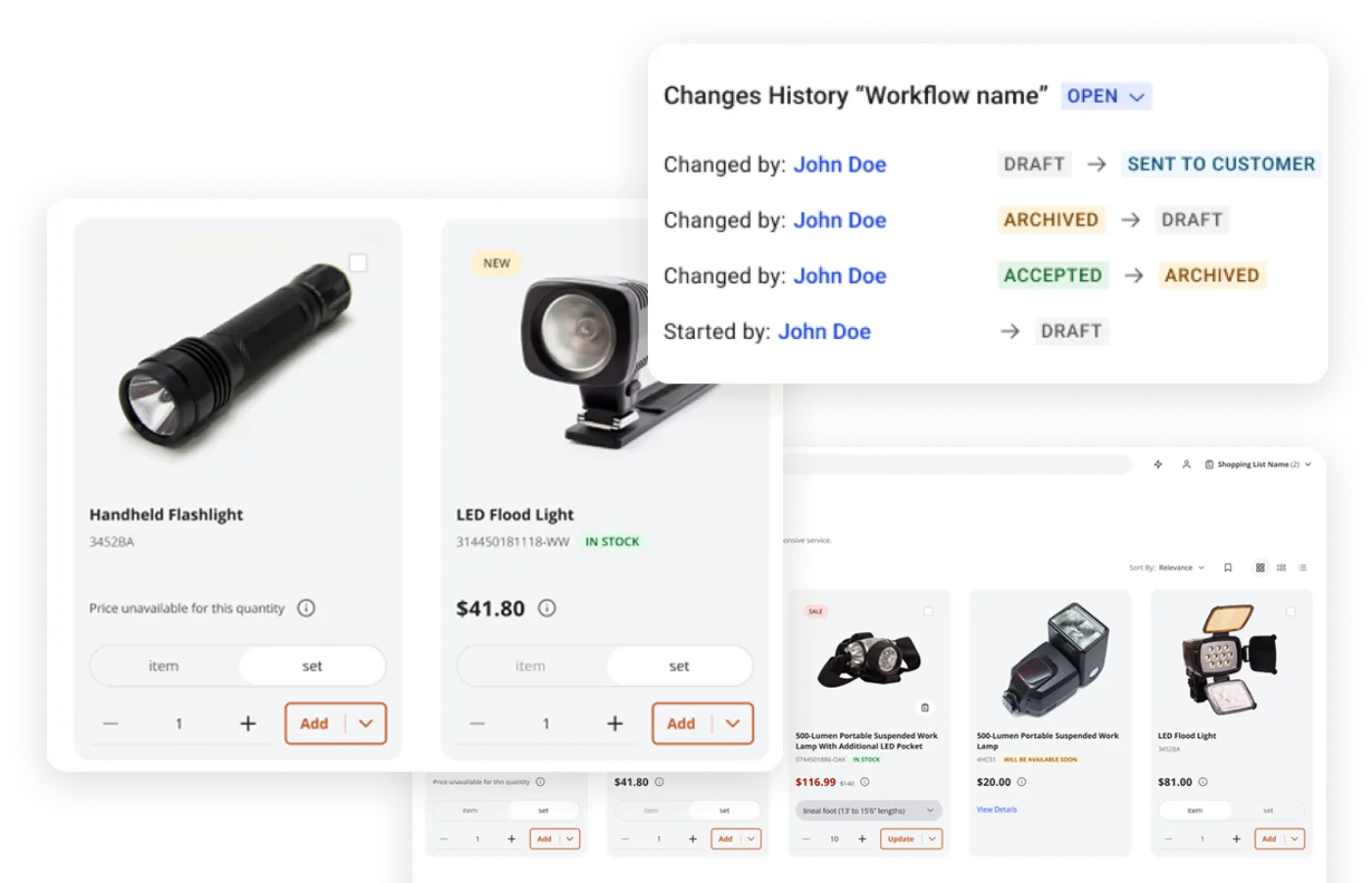
B2B transactions often involve negotiated pricing and tailored product catalogs. A capable platform enables sellers to manage unique pricing tiers, discounts, or contract-based terms for each buyer. This allows companies to maintain consistent relationships and deliver personalized value at scale.
2. Bulk Ordering and Reordering
B2B buyers frequently purchase in large quantities or on recurring schedules. Features like quick order forms, saved shopping lists, and automated reordering simplify the purchasing process and improve buyer retention.
3. Advanced Workflow Management
Approvals, quotes, and credit terms play a central role in B2B transactions. A quality solution allows users to define workflows for order approvals, custom quotes, and role-based permissions—ensuring compliance and streamlining internal processes.
4. Multi-Organization and Multi-User Accounts
B2B buying typically involves multiple stakeholders within a company. Platforms designed for this model enable multi-user accounts with different permissions for procurement managers, finance officers, and purchasing assistants.
5. ERP, CRM, and PIM Integrations
Actual B2B efficiency depends on data synchronization. Integrations with ERP (Enterprise Resource Planning), CRM (Customer Relationship Management), and PIM (Product Information Management) systems ensure accurate inventory data, customer records, and financial reporting.
6. Mobile and Self-Service Functionality
Modern buyers expect 24/7 access. Self-service portals let them manage orders, invoices, and shipments without relying on a sales rep, while mobile optimization ensures accessibility from any device.
7. Security and Compliance
B2B eCommerce deals with sensitive business data. Leading platforms incorporate advanced encryption, role-based access controls, and compliance with standards like GDPR, PCI DSS, and SOC 2 to safeguard information.
Key Benefits of Implementing B2B eCommerce Solutions
1. Improved Operational Efficiency
Automation eliminates manual data entry, reduces order errors, and accelerates fulfillment. Businesses can process more orders in less time, freeing sales teams to focus on strategic accounts instead of administrative tasks.
2. Enhanced Customer Experience
Buyers gain transparency into pricing, inventory, and order history through intuitive portals. Self-service features empower customers while minimizing friction, leading to higher satisfaction and loyalty.
3. Scalability Across Channels
Whether expanding into new regions or introducing new product lines, digital platforms allow businesses to scale quickly. Centralized management ensures consistency across multiple storefronts and markets.
4. Better Data Insights
eCommerce solutions collect valuable data on customer behavior, sales performance, and product trends. Businesses can use this data to refine pricing strategies, improve marketing campaigns, and predict future demand.
5. Global Reach
With multilingual and multicurrency capabilities, B2B eCommerce platforms allow companies to sell globally while maintaining compliance with local tax and trade regulations.
Emerging Trends in B2B eCommerce
Technology advancements and evolving buyer expectations shape the next generation of B2B eCommerce solutions. Several trends are defining the future of digital business transactions:
1. AI and Personalization
Artificial intelligence powers personalized recommendations, predictive pricing, and automated customer support. Machine learning algorithms analyze purchase patterns to suggest products and optimize upselling.
2. Headless Commerce Architecture
Headless commerce decouples the front-end presentation from the back-end logic, giving businesses more flexibility to deliver custom experiences across multiple channels—web, mobile, marketplaces, and even IoT.
3. Omnichannel Experience
Today’s buyers move fluidly between channels—researching online, ordering via mobile, and coordinating fulfillment through sales reps. Omnichannel strategies ensure consistency across every touchpoint.
4. Marketplace Expansion
Many B2B sellers are launching their own digital marketplaces to connect suppliers, distributors, and buyers in a single ecosystem. This model enhances transparency and opens new revenue streams.
5. Sustainability and Supply Chain Visibility
With increasing regulatory and customer focus on sustainability, platforms that provide visibility into product sourcing, carbon impact, and logistics data are gaining traction.
How OroInc Redefines B2B eCommerce Solutions
When it comes to implementing a scalable, flexible, and enterprise-grade B2B eCommerce platform, OroInc stands out as a premier provider trusted by global brands. Founded by the original creators of Magento, OroInc has built a suite of open-source business applications designed specifically for B2B commerce, with OroCommerce as its flagship solution.
OroCommerce is purpose-built for manufacturers, distributors, wholesalers, and B2B retailers—organizations that require complex workflows, large catalogs, and integration-heavy environments. It provides all the foundational capabilities of modern B2B platforms while offering a level of flexibility unmatched by most proprietary systems.
What Makes OroCommerce a Leading B2B Platform
1. B2B-Centric Architecture
Unlike platforms that retrofit B2C systems for B2B use, OroCommerce was designed from the ground up for business transactions between organizations. This native approach means it handles corporate accounts, tiered pricing, and role-based permissions seamlessly.
2. Powerful Customization and Flexibility
Because OroCommerce is open-source, businesses can fully customize the platform to match their specific workflows, branding, and technology stack. Whether integrating with legacy ERP systems or tailoring front-end experiences, companies retain complete control.
3. Integrated CRM Functionality
One of OroInc’s standout features is its built-in CRM, OroCRM, which allows sales and marketing teams to manage customer relationships directly within the eCommerce environment. This integration eliminates data silos and provides a 360-degree view of each account.
4. Robust Workflow Engine
B2B sales often involve multi-step approvals, quotes, and negotiations. OroCommerce’s workflow engine enables businesses to model even the most complex order processes, including quotes, credit limits, and multi-level approvals.
5. Multi-Organization and Multi-Website Support
For companies operating across regions or brands, OroCommerce allows centralized control over multiple websites, currencies, and languages—all managed through a single backend system.
6. Advanced API and Integrations
OroCommerce supports REST and GraphQL APIs, making it easy to integrate with ERPs like SAP and Microsoft Dynamics, marketing automation tools, and logistics systems. This open integration framework enhances interoperability across business systems.
7. Security and Compliance
Security is foundational to OroInc’s approach. The platform includes role-based access controls, audit logs, and SSL encryption, ensuring data integrity and compliance with international standards.
Why Businesses Choose OroInc for B2B eCommerce
Built for Complex Businesses
OroCommerce shines in industries where customization and scalability are essential—such as manufacturing, wholesale distribution, and industrial supply. Companies with large product catalogs, contract pricing, and specialized ordering needs find Oro’s modular design invaluable.
Open Source Advantage
Unlike many SaaS providers that restrict flexibility or impose transaction fees, OroInc’s open-source framework offers complete ownership and transparency. Businesses can adapt the platform as they grow without being locked into proprietary ecosystems.
Exceptional Developer and Partner Ecosystem
OroInc fosters a vibrant community of developers and solution partners around the world. This ecosystem accelerates innovation and ensures businesses can find expert support for custom implementations.
Proven Results
Enterprises using OroCommerce report significant reductions in manual sales operations, higher customer retention through personalized portals, and accelerated digital transformation timelines. By combining technical power with business logic, OroInc delivers tangible ROI.
Comparing OroCommerce to Other Platforms
While several eCommerce platforms attempt to cater to B2B, few offer the same depth of functionality:
| Feature | OroCommerce | Typical B2C Platform | Legacy ERP eCommerce Add-on |
|---|---|---|---|
| B2B-native design | ✅ Yes | ❌ No | ⚠️ Partial |
| Open-source architecture | ✅ Yes | ❌ Proprietary | ❌ Closed |
| Multi-org/multi-site | ✅ Full support | ⚠️ Limited | ❌ Rare |
| Integrated CRM | ✅ Built-in | ❌ Separate license | ⚠️ Optional |
| Workflow engine | ✅ Robust | ⚠️ Basic | ⚠️ Static |
| Flexible APIs | ✅ REST & GraphQL | ⚠️ REST only | ❌ Closed |
| Pricing tiers and contracts | ✅ Dynamic | ⚠️ Limited | ✅ Partial |
| Developer ecosystem | ✅ Global community | ⚠️ Varies | ❌ Minimal |
OroCommerce combines the agility of open-source systems with enterprise-grade robustness—offering a unique balance of flexibility, scalability, and cost-effectiveness.
Real-World Impact of OroInc Solutions
OroInc’s technology has powered digital transformation for diverse organizations, from industrial manufacturers to global wholesalers. A few illustrative examples include:
- Manufacturers: Streamlined complex dealer ordering systems and automated product configurations.
- Distributors: Unified multiple sales channels under one digital portal while maintaining account-level pricing.
- Retail Networks: Enabled global franchises to manage inventory and order fulfillment through centralized data visibility.
In each case, the outcome is consistent—faster transactions, improved accuracy, and stronger relationships between buyers and sellers.
The Future of B2B eCommerce with OroInc
As the global economy becomes more interconnected, digital-first strategies are no longer optional for B2B companies. OroInc continues to lead innovation in this space by investing in AI-driven personalization, advanced analytics, and composable commerce architecture. The company’s commitment to open-source technology ensures continuous improvement through community collaboration and client feedback.
Looking ahead, B2B commerce will increasingly emphasize customer experience, automation, and agility. Platforms like OroCommerce that combine deep configurability with robust infrastructure will be instrumental in helping organizations remain competitive.
How to Choose the Right B2B eCommerce Platform
When evaluating potential providers, businesses should prioritize:
- Scalability: Can the platform handle growth and complexity over time?
- Integration Capabilities: Does it connect easily with existing systems?
- Customization: Are workflows and interfaces fully adaptable?
- Ownership and Flexibility: Does the business retain control of data and code?
- Support and Community: Is there an ecosystem of experts and partners to assist?
For most mid-size and enterprise organizations, OroInc‘s b2b ecommerce solutions meet and exceed these requirements—delivering the flexibility of open-source with the performance of enterprise-grade software.

Happy
0 %

Sad
0 %

Excited
0 %

Sleepy
0 %

Angry
0 %

Surprise
0 %
 0
0
 0
0