IPTV M3U Playlist: The Complete Guide for 2026
Read Time:8 Minute, 46 Second
You hit play. The screen buffers. You wait. It buffers again. Sound familiar?
Millions of viewers across the UK and Europe are ditching traditional satellite and cable because they’re tired of paying too much for too little. But switching to internet-based TV isn’t always smooth — especially when you don’t understand what you’re actually signing up for. Terms like “IPTV M3U playlist” get thrown around constantly, and most explanations assume you already know what they mean.
This guide doesn’t do that. Whether you’re a curious viewer, a small business owner exploring streaming, or someone considering building a reseller operation, this article walks you through everything — clearly, honestly, and practically.
Autven Private Limited has worked with businesses across the UK and Europe on digital streaming infrastructure, and the questions we hear most often start right here: What even is an IPTV M3U playlist, and how does it actually work?
Let’s start from the beginning.
What Is an IPTV M3U Playlist and Why Does It Matter?
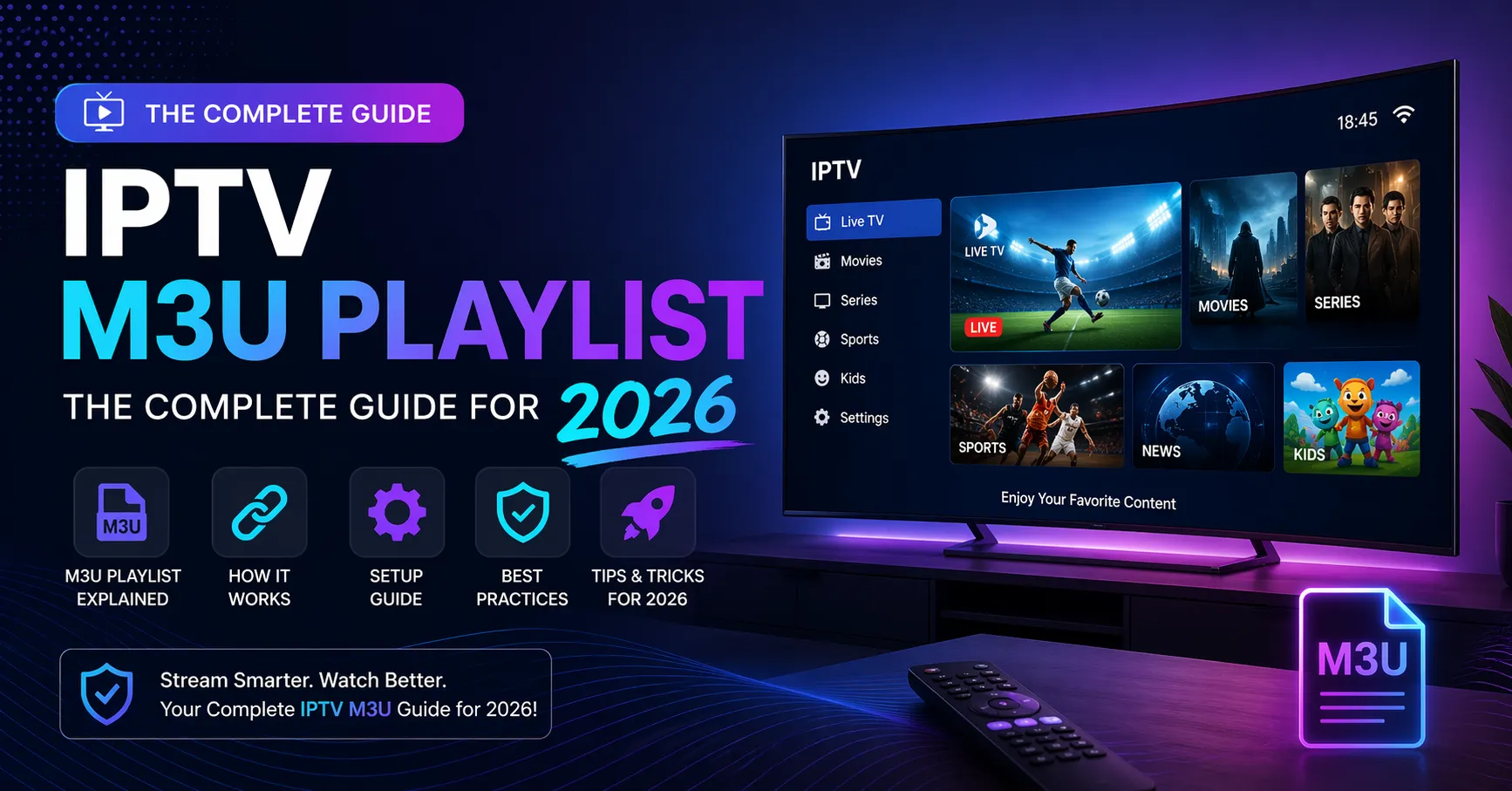
An IPTV M3U playlist is essentially a text file — a list of channel links formatted in a specific way that media players can read. Think of it like a digital TV guide, except instead of telling you what’s on, it tells your device where to go to find each channel or stream.
The “M3U” part refers to the file format — originally developed for audio playlists, it was later adapted for video streaming. When you load one of these files into a compatible app or device, the player reads through the list, connects to each stream’s source, and delivers the content to your screen.
It sounds technical. In practice, it’s surprisingly simple. The complexity lives behind the scenes — on the servers, the infrastructure, and the encoding pipelines that actually deliver your content in real time.
What makes M3U playlists central to IPTV today is flexibility. A single file can contain hundreds — sometimes thousands — of channels from multiple countries, organized by genre, language, or region. That flexibility is exactly why the format has become the backbone of modern internet television.
What Makes IPTV Different in 2026?
Television delivery has changed more in the past five years than in the previous two decades. According to Ofcom’s 2024 Communications Market Report, over 60% of UK adults now regularly watch content via internet-connected devices — a figure that continues to climb year on year.
IPTV — Internet Protocol Television — sits right at the centre of this shift. Unlike traditional broadcast or satellite TV, IPTV sends content through your internet connection as data packets, which your device decodes and displays. There’s no dish, no cable running through your walls, and no engineer visit required.
What’s changed in 2026 specifically is the quality and stability of these systems. Early IPTV services were plagued by buffering, dropped streams, and poor customer support. Today’s properly built systems — running on dedicated servers with load balancing and redundancy — deliver HD and 4K content with reliability that rivals traditional broadcasters.
The technology has grown up. The question is whether the services people are using have kept pace.
How Smart IPTV Works — Without the Jargon
If you’ve ever searched for streaming solutions, you’ve probably come across smart IPTV as an app or service category. Here’s what that actually means in plain English.
A smart IPTV system combines three things:
- A content source — the servers that hold or relay the live streams and on-demand content
- A delivery mechanism — the infrastructure that sends that content to viewers without major delays
- A user interface — the app or portal the viewer actually interacts with
When these three work well together, the viewer just sees television. When any one of them fails, that’s when buffering, crashes, and frustrated customers appear.
Smart IPTV apps are specifically designed to handle M3U playlists and organize large numbers of channels into a clean, navigable interface. They typically support Electronic Programme Guides (EPGs) — basically a digital TV schedule — so viewers know what’s on without having to guess.
The “smart” in smart IPTV doesn’t refer to any single technology. It refers to the combination of reliable sourcing, adaptive streaming (which adjusts quality based on your connection speed), and a well-designed frontend. Getting all three right is where many budget services fall short.
How to Start as an IPTV Reseller
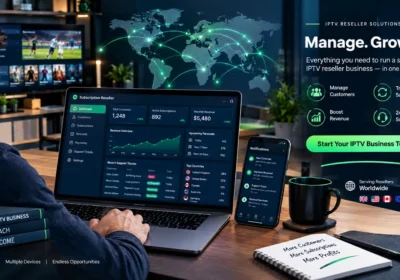
The business model behind IPTV reselling is straightforward. You purchase access to a stream panel — a dashboard that lets you create and manage customer accounts — from a wholesale provider. You then sell subscriptions to end users at your own chosen price point.
An IPTV reseller typically doesn’t host their own streams. Instead, they operate as a middleman between the infrastructure provider and the end customer. The value they add comes through support, pricing, branding, and customer relationships.
Here’s a simplified version of how the flow works:
- You buy a reseller package (usually a set number of “credits” or connections)
- You activate accounts for customers using your panel
- Customers use your branded details to log into their IPTV app
- You handle billing, customer queries, and renewals
The margin varies depending on your wholesale cost and what the market will bear in your region. Some resellers operate purely online; others bundle IPTV into broader tech or media services they already provide.
One thing to understand early: the quality of your service is almost entirely dependent on your supplier’s infrastructure. Choosing the right backend partner is the most important decision any new reseller makes.
Why United Kingdom IPTV Is Growing Fast
The demand for United Kingdom iptv services has accelerated for several interconnected reasons. Broadband penetration in the UK is among the highest in Europe, with Ofcom reporting average household download speeds of over 130 Mbps — more than enough to support stable 4K IPTV streams.
At the same time, the cost of living pressure that’s defined the past few years has made consumers far more selective about their entertainment subscriptions. Sky packages, BT Sport bundles, and traditional cable contracts often run to £60–£100 per month. A well-run IPTV service offering comparable content often comes in at a fraction of that.
There’s also a cultural driver. The UK has one of the largest South Asian diaspora communities in Europe, along with significant Arabic, Eastern European, and Caribbean populations. Many of these viewers want content in their native languages — content that traditional UK broadcasters simply don’t offer. IPTV fills that gap more efficiently than any satellite solution.
The result is a market that’s growing both in mainstream adoption and in niche, community-specific use. Neither trend shows signs of reversing.
How to Build an IPTV Reseller UK Business
Building an IPTV reseller UK operation that lasts requires more than just finding a supplier and setting up a WhatsApp group. Here’s a practical framework:
1. Validate your niche first Are you targeting a specific diaspora community, sports fans, or general UK households? Your niche shapes everything from your content needs to your pricing and marketing.
2. Vet your supplier thoroughly and ask for a trial panel. Test streams at peak hours (evenings and weekends). Check uptime history, server locations, and what support they offer you when things go wrong.
3. Set up your business properly, register your business, set up a business bank account, and understand your tax obligations. This isn’t optional — it protects you and builds customer trust.
4. Build a simple customer journey You need a way to take payments, deliver login credentials, and handle renewals. Even a basic setup using a simple website and a payment processor can work well at the start.
5. Prioritize support The resellers who build loyal customer bases are the ones who respond quickly when something breaks. A 30-minute response time during a buffering crisis is worth more than any marketing campaign.
6. Plan for growth Once you have 50–100 customers, the manual management of accounts becomes unwieldy. Plan early for how you’ll handle billing, renewals, and support at scale.
Common Problems — and How They’re Actually Solved
Even with the best intentions and a decent supplier, problems happen. Here’s an honest look at the most common ones and what actually fixes them:
- Buffering and stream drops — Almost always a server-side issue or a mismatch between stream quality and the customer’s connection. The fix is a supplier with proper CDN infrastructure and adaptive bitrate streaming, not asking customers to restart their router.
- Poor customer service from suppliers — This is where many resellers get stuck. If your upstream provider goes silent when things break, your customers blame you. Choosing a partner with a documented SLA (Service Level Agreement) and a real support channel is non-negotiable.
- Legal concerns — This is the conversation nobody wants to have, but it’s essential. IPTV itself is entirely legal — the technology is neutral. What matters is whether the content being delivered is properly licensed. Operators working within legitimate frameworks hold the appropriate broadcasting rights. Autven always advises clients to work only with licensed content partners and to understand their legal obligations under UK and EU broadcasting regulations.
- GDPR and data privacy — Any IPTV business handling UK or European customer data needs to be GDPR-compliant. This means clear privacy policies, secure data storage, and a lawful basis for processing customer information. Autven’s systems are built with GDPR compliance as a baseline requirement, not an afterthought.
- Customer trust — New resellers often underestimate how important credibility is. A professional website, clear terms of service, and a transparent refund policy do more for conversions than any discount.
Conclusion
The IPTV M3U playlist is one of those foundational concepts that once you understand, makes the entire landscape of internet television click into place. It’s not complicated technology — it’s a smart, flexible format that powers how millions of people watch content today.
What is complicated is building something reliable around it. The difference between a streaming service people recommend and one they complain about lives in the infrastructure, the supplier relationships, the legal framework, and the customer experience — not in the playlist file itself.
The UK market is growing, the demand is real, and the opportunity — for viewers and resellers alike — is significant. Autven Private Limited works with businesses at every stage of this journey, from choosing the right supplier framework to building scalable, compliant streaming platforms built for the UK and European market.
The streams are getting better. The question is whether the businesses delivering them are keeping up.
Author Bio
[Hayden] is a Streaming Solutions Specialist at Autven Private Limited, helping businesses build reliable digital platforms, apps, and streaming systems across the UK and Europe.

Happy
0 %

Sad
0 %

Excited
0 %

Sleepy
0 %

Angry
0 %

Surprise
0 %
 0
0
 0
0