
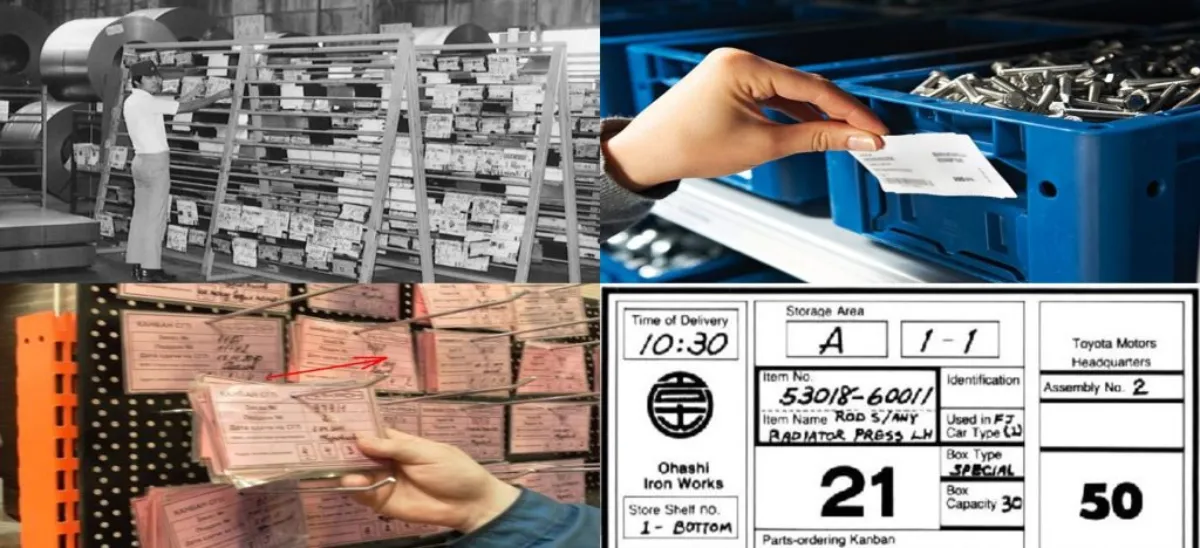
Kanban Method Visible Card
Read Time:3 Minute, 36 Second
Kanban Method: “Visible Card” Aimed at Efficiency and Savings
The “Kanban Method” is a mechanism for organizing work according to available resources and customer demand, rather than following a predefined plan. In this method, employees are given the autonomy to make decisions at each stage, ensuring transparency and enabling everyone to coordinate their work accordingly. The term “Kanban” is derived from Japanese and means “Visible Card,” emphasizing the visualization of work elements on a board to provide a clear view of the workflow for all involved.
The main goal of the “Kanban Method” is to manage work efficiently with limited resources and avoid bottlenecks in the system. It is based on the “pull system” principle, where work progresses by responding to customer needs rather than sticking to a rigid plan. This approach allows teams to better manage resources and respond quickly to changes.
Modern Kanban boards are often digitalized through automation tools, incorporating data on available resources, customer requirements, and specific employee responsibilities. This creates a visual management system that helps determine what, when, and how much to produce.
The method originated from the Toyota Production System in the late 1940s, when Toyota Motor Corporation implemented the “just-in-time” manufacturing system. The primary goal was to reduce costs while expanding into new markets. In 1989, Bill Gates’ “Corbis Corporation” adapted Toyota’s methodology for broader use in organizational processes through digital visualization. Today, Kanban boards are widely used in software development.
Kanban boards can vary in design, typically displaying types of work elements such as “features” and “user stories,” columns for workflow actions, clear policies, and “swimlanes” to group user stories by characteristics. The aim is to simplify the overall workflow and visualize the progress of individual elements for both participants and stakeholders.
The “Kanban Method” divides work into small stages—start, progress, and completion. This enables everyone to see what is happening at each step. The team works together by distributing tasks, with clear start and end points and well-defined phases in between. These phases can be adjusted as needed, visible to all employees, allowing them to adapt their work accordingly. The focus remains on ongoing tasks to ensure the team does not get distracted by new tasks until the current ones are completed. This workflow limitation helps identify network issues quickly and resolve them immediately.
Automated Kanban systems are particularly effective, facilitating coordinated work not only within a single team but also across multiple teams through interconnected Kanban boards. These systems not only monitor the start, progress, and completion of work but also predict how long each phase will take from start to finish. This enables both managers and teams to make quick adjustments and data-driven decisions.
The Kanban method also offers effective warehouse management by providing visibility into every element of the work chain. This ensures that products and components are purchased as needed, avoiding surplus stock and preventing shortages that could disrupt production processes.
In project management, the “Kanban Method” is an effective tool, allowing project managers to visualize the entire workflow, monitor changes at each stage, and move quickly from one task to the next. This ensures that employees remain neither idle nor overburdened.
For example, a marketing company that implemented the “Kanban Method” through an automated system saved 30% of its resources. By eliminating redundant processes and making optimal decisions based on available data, employees delivered products and services with the exact parameters desired by customers while using fewer resources.
Overall, the “Kanban Method” provides teams with a simplified and visualized view of workflow, allowing for efficient organization and management of ongoing work with minimal resources. By setting priorities, it prevents work from stalling due to a shortage of a non-critical resource and helps quickly review and improve work processes. It offers a clear and efficient workflow model adapted to customer demands and is widely used in both manufacturing and software development industries.
Como Code specializes in developing and implementing management systems, including the application of the Kanban Method and Agile concepts in project management processes. Our team visualizes workflows to ensure that every team member sees the current stages and makes optimal decisions.
Additionally, our commercial software solutions include comprehensive warehouse management modules that enable efficient management of product flows, reduce costs, and prevent the accumulation of excessive stock.

Happy
0 %

Sad
0 %

Excited
0 %

Sleepy
0 %

Angry
0 %

Surprise
0 %
 0
0
 0
0